
Can you leave your dog alone after surgery? Sometimes, but how soon and for how long depends on the procedure, your dog’s condition, medications, mobility, behavior, and your veterinarian’s specific instructions. Some dogs may be safely confined for short periods during recovery, while others need closer supervision, medication support, bathroom assistance, or help maintaining strict activity restrictions.
Before heading back to work or leaving for several hours, the most important question isn’t simply “Can my dog be alone?”
It’s “What does my dog need while I’m gone?”
Why Supervision Matters After Dog Surgery
Coming home from the veterinary hospital doesn’t necessarily mean your dog is ready to return to their normal routine.
Following surgery, your dog may be dealing with the effects of anesthesia, discomfort, an incision or stitches, new medications, and temporary restrictions on their movement.
The ASPCA’s post-surgery guidance recommends limiting activity during recovery and placing pets in an appropriately sized kennel, crate, carrier, or small room when they can’t be supervised. The ASPCA also advises preventing running, jumping, long walks, and play that could interfere with healing.
Similarly, VCA Animal Hospitals notes that confinement and close supervision indoors can be important following surgery, particularly because excessive activity may contribute to complications.
The exact restrictions and how long they last depend on your dog’s procedure. Always follow the discharge instructions provided by your veterinarian first.
Before Leaving Your Dog Alone, Ask These Questions
Every recovery is different. Before deciding whether your dog can safely spend time alone, consider:
1. How recently did my dog have surgery?
The first hours after returning home may look very different from several days into recovery.
Your dog may initially be sleepy, disoriented, unsteady, or less interested in food following anesthesia. The ASPCA recommends monitoring pets for signs of an abnormal recovery from anesthesia or surgery and contacting the appropriate veterinary provider when concerning symptoms occur.
If your dog has just returned home, ask your veterinarian specifically what level of observation they recommend during the first evening and following day.
2. Can my dog move around safely?
Can your dog stand up independently? Walk outside? Get into their normal resting area?
Some procedures particularly orthopedic surgeries can temporarily make everyday movements much more difficult.
If your dog needs help standing, walking, or going outside, consider who will provide that assistance while you’re away.
3. Can my dog follow their activity restrictions while alone?
This can be one of the biggest challenges.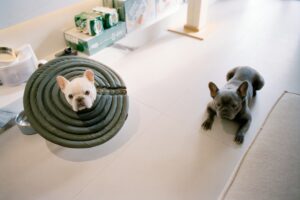
Your dog doesn’t know they’ve been told to rest.
They know someone walked past the window. There’s a squirrel in the yard. Their favorite couch is three feet away. Or another dog in the house wants to play.
Veterinarians frequently prescribe exercise restriction following surgery to protect healing tissues and incisions. VCA explains that exercise restriction may be used after surgery specifically to allow healing and prevent damage to an incision or internal sutures.
Ask yourself:
- Will my dog try to jump onto furniture?
- Can they access stairs?
- Will another pet encourage them to play?
- Are they comfortable resting in a crate or confined space?
- Are they likely to become anxious or overly active when I leave?
A dog who technically can be alone may still have difficulty following the restrictions needed for a safe recovery.
What About My Dog’s Incision?
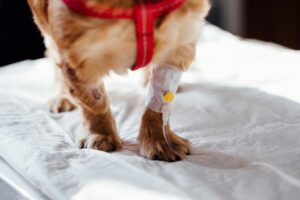
Incision protection is another important consideration.
Dogs may lick, chew, or scratch at surgical sites, particularly when no one is there to redirect them.
The ASPCA recommends checking surgical incisions daily and preventing pets from licking the area. VCA’s surgical incision guidance similarly emphasizes preventing licking and limiting activity that could put tension on a fresh incision.
Your veterinarian may recommend an e-collar, recovery suit, or another form of protection based on the location and type of surgery.
Before leaving, make sure you’re comfortable that your dog cannot easily access or interfere with the surgical site.
Don’t Forget About Medication Schedules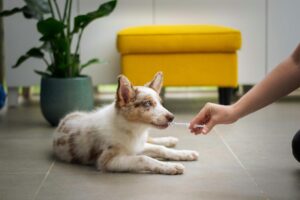
Then there’s the clock.
Your dog may need medication at specific times throughout the day. Depending on their recovery plan, that schedule might not conveniently fall before and after your workday.
Before leaving your dog for an extended period, ask:
- When is the next medication due?
- Does it need to be given with food?
- Are there multiple medications on different schedules?
- Does my dog reliably take their medication?
- What happens if I’m delayed getting home?
Never change a medication schedule or dosage simply to accommodate your schedule without first consulting your veterinarian.
For dogs enrolled in ACC+, our team can provide certain medication support according to veterinary instructions. Visit our ACC+ Frequently Asked Questions to learn more about medication administration and the types of support available.
How Long Can I Leave My Dog Alone After Surgery?
There isn’t a universal number of hours that’s appropriate for every dog.
A young dog recovering from one procedure may have very different needs from a senior dog recovering from orthopedic surgery. Even two dogs having the same procedure may behave differently at home.
That’s why generic rules such as “Your dog can be alone after 24 hours” aren’t particularly useful.
Instead, ask your veterinarian:
“Based on my dog’s procedure and recovery plan, how long are you comfortable with them being unsupervised?”
That’s a much better question and one your veterinary team can answer based on your individual dog.
Going Back to Work After Your Dog’s Surgery
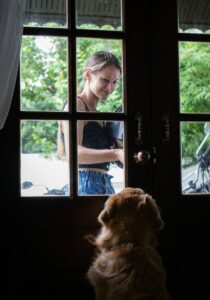 For many pet parents, this is where recovery becomes difficult.
You can follow the instructions. You can organize the medications. You can create a safe recovery space.
But eventually, you have to go back to work.
And your dog may be in an awkward middle ground:
They don’t need to remain hospitalized, but they’re not ready for their normal routine either.
Traditional dog daycare may not be appropriate for a dog who needs restricted activity, medications, mobility assistance, quiet rest, or protection from other dogs.
If that’s the situation you’re facing, read our guide to Post-Surgery Dog Care in Cockeysville, MD: A Safer Recovery Option Beyond Daycare.
When Additional Recovery Support May Help
Sometimes the issue isn’t that your dog can’t ever be left alone.
It’s that their recovery needs don’t fit neatly into your day.
That’s where Assisted Canine Care Plus (ACC+) can help.
ACC+ in Cockeysville, Maryland provides specialized recovery and support for medically stable dogs who need more than traditional daycare or boarding but don’t require hospitalization.
Depending on your dog’s needs and veterinary instructions, support may include:
- Controlled rest and movement
- Medication administration
- Controlled bathroom breaks
- Meals and hydration
- Mobility assistance
- Gentle enrichment when appropriate
- One-on-one attention
- Monitoring and comfort checks
ACC+ does not replace your veterinarian. We help pet parents carry the veterinarian’s care plan forward when they can’t be there themselves.
Learn more about eligibility, medications, monitoring, overnight stays, and how the program works in our ACC+ FAQs.
Planning Ahead Can Make Recovery Easier
If your dog has an upcoming procedure, don’t wait until the morning after surgery to figure out what happens when you return to work.
Before surgery, ask your veterinary team:
- How much supervision will my dog need?
- How long will activity be restricted?
- Will my dog need help going outside?
- What will the medication schedule look like?
- Can my dog safely be confined while I’m away?
- What changes should prompt a call to the veterinarian?
- When can my dog return to their normal routine?
Then look honestly at your own schedule.
If there’s a gap between the care your dog needs and the care you’re able to provide during the day, make a plan before your dog comes home.
The Bottom Line: Can You Leave Your Dog Alone After Surgery?
Possibly, but the answer depends on your individual dog and your veterinarian’s recovery instructions.
Some dogs can safely spend short periods resting in an appropriately confined environment. Others may require more frequent observation, medication, bathroom assistance, mobility support, or help maintaining activity restrictions.
Your veterinarian should determine the medical requirements.
Your job is to determine whether you can realistically provide them.
And when you can’t be there, having the right support can help bridge the gap.
ACC+ was created for exactly that space between veterinary care and home.
More Dog Recovery Resources
Continue exploring: