
Bringing your dog home after surgery, an injury, or a medical procedure is often when a new phase of care begins.
Your veterinarian provides the treatment and recovery instructions, but following those instructions day after day—managing medications, limiting activity, monitoring changes, helping with bathroom breaks, and keeping your dog comfortable—often falls to you.
For pet parents in Maryland, dog recovery care may happen at home or with additional support from a provider that can help follow your veterinarian’s recovery plan.
The important thing to remember: leaving the veterinary clinic doesn’t mean recovery is over. In many cases, it’s just beginning.
What Does Dog Recovery Look Like After a Vet Visit?
Every dog’s recovery is different. A dog recovering from a routine spay or neuter may have very different needs than a senior dog recovering from orthopedic surgery.
Depending on your veterinarian’s instructions, recovery may involve:
- Medications at specific times
- Restricted running, jumping, stairs, or play
- Incision or wound monitoring
- Controlled bathroom breaks
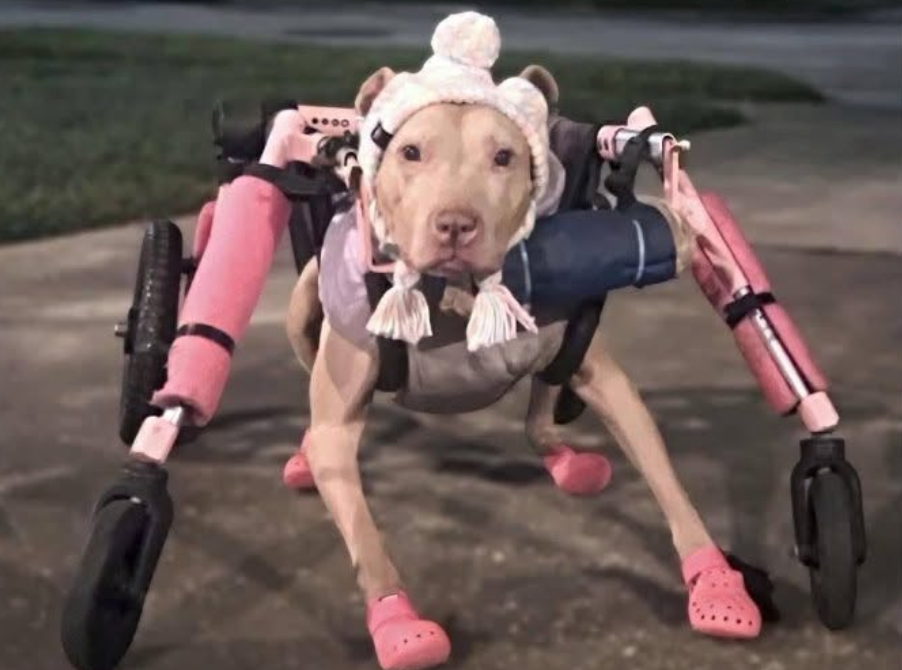
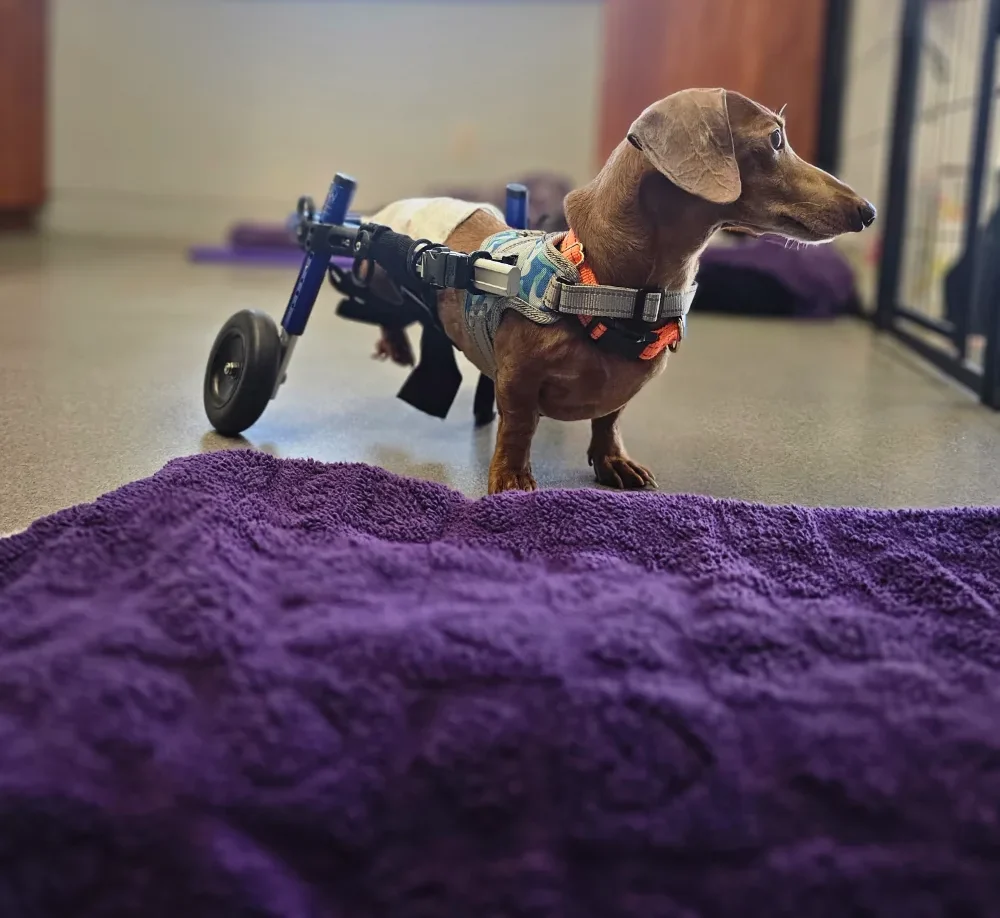
- Mobility assistance
- Monitoring eating, drinking, behavior, and bathroom habits
- Plenty of rest
- Calm, appropriate enrichment
- Follow-up veterinary appointments
It can sound manageable until real life enters the picture.
You have work. Your dog wants to jump on the couch. Another pet wants to play. Medication is due at noon. Your dog starts feeling better and doesn’t understand why they’re still not allowed to run.
That’s why recovery requires more than rest. It requires consistency.
Can I Leave My Dog Alone After Surgery?
This is one of the biggest questions pet parents face after bringing a dog home.
The answer depends on your dog’s procedure, mobility, medications, behavior, stage of recovery, and your veterinarian’s instructions.
Before leaving your dog alone, consider whether they can safely stand and walk, whether they need bathroom assistance, when medications are due, whether they’re likely to bother their incision, and whether they can access stairs, furniture, or other pets.
When in doubt, ask your veterinarian what level of supervision is appropriate for your dog’s specific recovery.
What Does “Restricted Activity” Actually Mean?
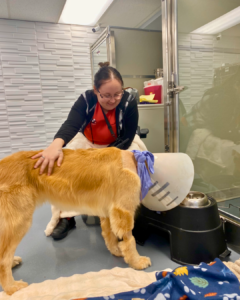
“Restrict activity” sounds simple until you’re trying to explain it to a dog who suddenly feels better.
Depending on your veterinarian’s instructions, restricted activity may mean no running, jumping, stairs, roughhousing, long walks, or unrestricted backyard play.
One of the challenges of recovery is that your dog may start acting like they feel better before they’re cleared to return to normal activity.
Following those restrictions consistently helps protect the recovery process—even when your dog would much rather chase a squirrel.
How Do I Keep My Dog From Getting Bored During Recovery?
Physical rest doesn’t mean your dog’s brain suddenly switches off.
For active dogs, boredom can become one of the more challenging parts of recovery. Depending on your dog’s condition and veterinary recommendations, calm attention, food-based enrichment, scent activities, and other low-impact activities may provide stimulation without interfering with physical restrictions.
The goal is to support your dog’s emotional well-being without compromising their physical recovery.
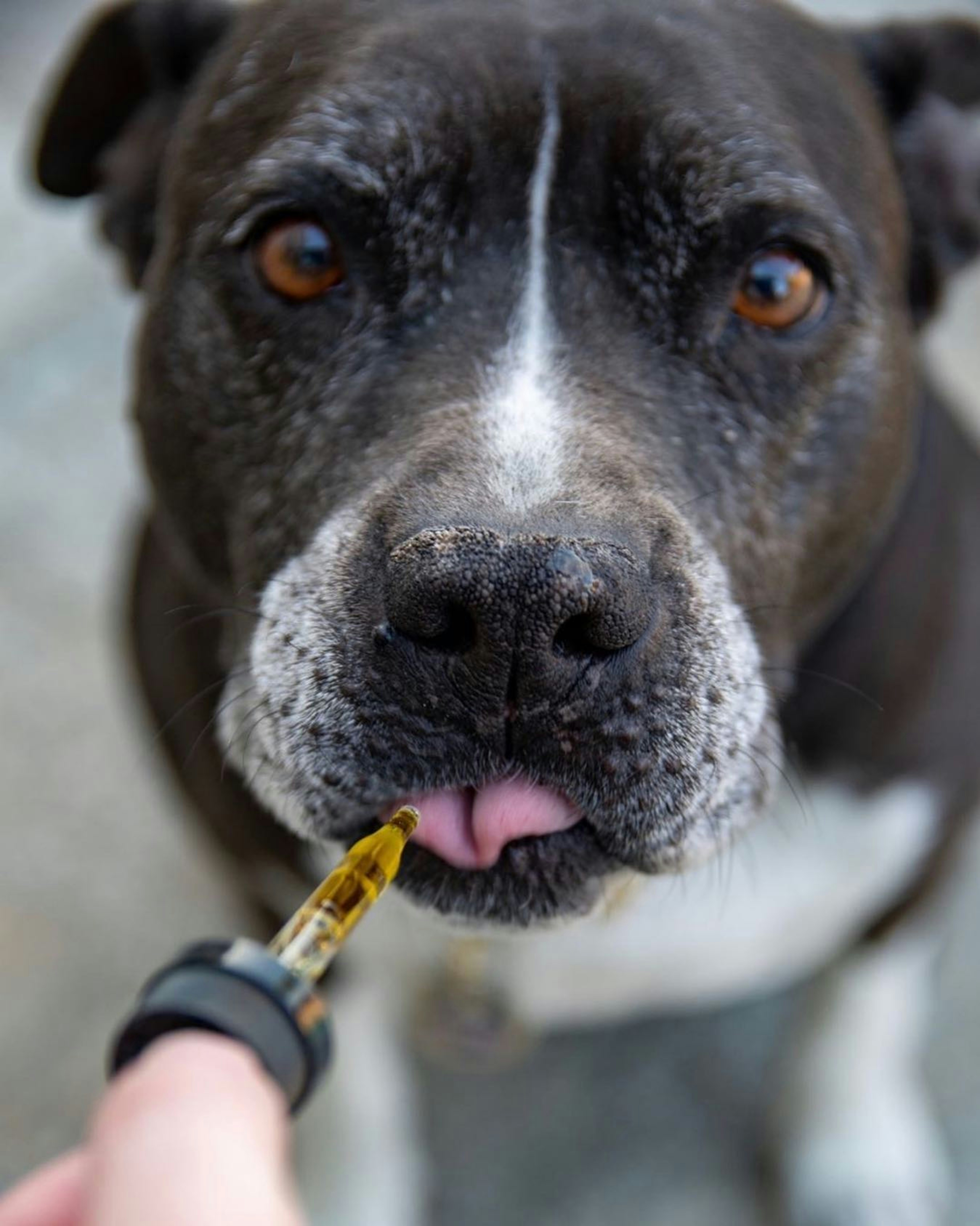
How Do I Manage Medications and Monitor My Dog?
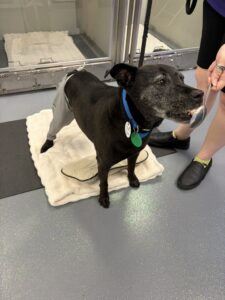
Recovery can quickly become a schedule: medications, meals, bathroom breaks, incision checks, controlled movement, rest, and then doing it all again tomorrow.
Keeping a written schedule can help you track medication times, meals, bathroom habits, activity, and anything unusual you notice.
During recovery, pet parents may also need to monitor changes in:
- Appetite and water intake
- Bathroom habits
- Energy and behavior
- Mobility and comfort
- Incisions or wounds
- Ability to rest
Your veterinarian should explain what’s expected following your dog’s procedure and when you should contact their office.
Never change your dog’s medication or recovery instructions without consulting your veterinarian.
ACC+ can provide medication support according to veterinary instructions. You can learn more about medications, monitoring, eligibility, and the types of care ACC+ provides in our ACC+ Frequently Asked Questions.
What If I Can’t Be Home During My Dog’s Recovery?
This is where many families encounter a very practical problem:
Your dog doesn’t need to remain hospitalized but they’re not ready to resume normal life either.
Traditional dog daycare may not be appropriate for a recovering dog with activity restrictions, mobility challenges, medications, or an incision that needs protection.
At the same time, leaving your dog home alone for an entire workday may not work with their recovery plan.
Specialized recovery support can help bridge that gap.
For a deeper look at this challenge, read Post-Surgery Dog Care in Cockeysville, MD: A Safer Recovery Option Beyond Daycare.
What Is ACC+?
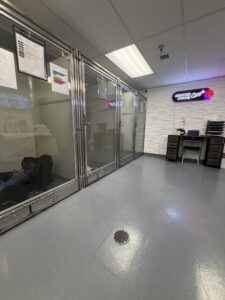
Assisted Canine Care Plus (ACC+) is a specialized recovery and support program for medically stable dogs who need more than traditional daycare or boarding but don’t require hospitalization.
We bridge the gap between veterinary care and home.
ACC+ can support dogs recovering from surgery or injury, managing mobility challenges, following activity restrictions, or requiring medications and additional observation throughout the day.
Depending on your dog’s individual needs and veterinary instructions, care may include:
- Controlled rest and movement
- Medication administration
- Controlled bathroom breaks
- Meals and hydration
- Gentle enrichment when appropriate
- One-on-one attention
- Monitoring and comfort checks
Our role isn’t to replace your veterinarian.
It’s to help carry their care plan forward.
Is ACC+ Different From Dog Daycare?
Yes.
Traditional daycare is generally designed around socialization, stimulation, and activity. Recovery often requires the opposite: controlled movement, quiet rest, individual attention, and protection from overexertion.
Dogs recovering with ACC+ may have minimal to no interaction with other dogs depending on their individual needs and recovery plan.
If your dog is healthy and ready for traditional group play, ACC+ probably isn’t the right program. But if your dog isn’t ready for normal activity and doesn’t require hospitalization, specialized recovery support may be worth considering.
Learn more about how ACC+ works, which dogs may be eligible, medication support, overnight care, and more in our ACC+ FAQs.
What Types of Dogs Can ACC+ Support?
ACC+ works with medically stable dogs experiencing a range of recovery and support needs, including some dogs recovering from orthopedic procedures, soft tissue surgery, spay or neuter surgery, dental or eye procedures, amputation, or injuries requiring restricted activity.
ACC+ may also support dogs experiencing mobility challenges or managing certain ongoing conditions.
However, ACC+ is not a veterinary hospital or emergency medical provider. Dogs requiring emergency or intensive veterinary treatment or those with contagious illnesses are not appropriate for the program.
If you’re unsure whether your dog may be a fit, start with our Frequently Asked Questions or talk with the ACC+ team.
Your Veterinarian + You + The Right Support
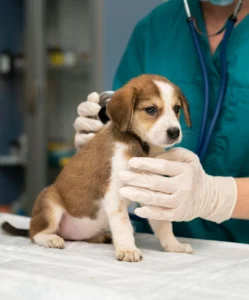
Recovery is a team effort.
Your veterinarian provides the medical treatment and establishes the recovery plan.
You provide the love, advocacy, and consistency your dog depends on.
And when you need additional help, ACC+ can provide the structure and support needed to help carry that recovery plan forward.
That’s the space ACC+ was created to fill:
Not daycare. Not a veterinary hospital. A bridge between veterinary care and home.
Dog Recovery Care in Cockeysville, Maryland
ACC+ provides specialized dog recovery care in Cockeysville, Maryland, for pet parents throughout Baltimore County and surrounding Maryland communities.
If your dog has an upcoming procedure—or is already recovering—start by talking with your veterinarian about what their recovery will require.
Then, if you need additional help managing that care, talk with our team about whether ACC+ may be an appropriate part of your dog’s recovery plan.
Because healing doesn’t end when you leave the vet. It’s just beginning.
More Dog Recovery Resources
Our growing recovery resource library answers the questions pet parents ask most often.
Read now: