
A dog ACL tear, more accurately called a cranial cruciate ligament or CCL tear, is an injury to one of the important stabilizing ligaments in a dog’s knee. Treatment may include surgery such as TPLO, nonsurgical or medical management, rehabilitation, activity restriction, or a combination of approaches depending on the individual dog.
If your dog was just diagnosed with a torn ACL or CCL, you probably have a lot of questions.
Does my dog need surgery? Can an ACL tear heal without surgery? How much can my dog walk? How do I keep them from running or jumping? What does TPLO recovery involve? And what happens when I have to go to work?
This guide walks through the dog ACL and CCL journey from diagnosis and treatment decisions through recovery and returning to normal activity.
Your veterinarian or veterinary surgeon should determine the appropriate treatment and recovery plan for your dog. This guide is intended to help pet parents better understand the process and the questions they may encounter along the way.
What Is a Dog ACL or CCL Tear?
What pet parents commonly call a dog ACL is actually the cranial cruciate ligament, or CCL.
The CCL is an important ligament inside a dog’s knee. It helps stabilize the joint as the dog stands, walks, runs and changes direction.
Because it serves a similar function to the ACL in a human knee, “dog ACL tear” has become a common way to describe the injury.
However, canine CCL disease is not always the result of one dramatic accident. The ligament can weaken or degenerate over time. Dogs can experience partial or complete tears, and some dogs eventually develop problems in both knees.
What Are the Signs of an ACL or CCL Tear in Dogs?
A dog with an ACL or CCL injury may suddenly begin limping on a back leg, but signs can also develop more gradually.
Possible signs include:
- Limping or lameness in a rear leg
- Difficulty putting weight on one leg
- Stiffness, especially after resting
- Difficulty getting up
- Difficulty using stairs
- Reluctance to jump
- Reduced interest in running or playing
- Changes in the way your dog sits
- Changes in normal movement or activity
The severity of these signs can vary. A dog may also appear better after resting and then begin limping again after activity.
These signs are not specific to CCL injuries. Other orthopedic and neurologic problems can cause similar changes, so a veterinarian should evaluate new or significant mobility problems.
How Is a Dog ACL or CCL Tear Diagnosed?
A veterinarian typically begins by examining the dog and evaluating the affected knee.
They may assess the stability of the joint and look for findings consistent with cranial cruciate ligament disease. Imaging such as X-rays may also be recommended to evaluate the knee, look for changes associated with the injury and help plan treatment.
Some dogs may be referred to a veterinary surgeon for further evaluation, particularly when surgery is being considered.
Once the injury has been evaluated, the next major question is usually how it should be treated.
Does a Dog ACL Tear Always Require Surgery?
Not every dog with an ACL or CCL injury follows the same treatment plan.
Some dogs are treated surgically. Others may follow a veterinarian-directed nonsurgical approach, often called medical or conservative management.
The appropriate treatment can depend on factors such as:
- The degree of knee instability
- The dog’s size
- Age
- Activity level
- Overall health
- Other orthopedic conditions
- The individual dog’s needs
Your veterinarian may recommend consultation with a veterinary surgeon when deciding which approach is appropriate.
The important thing for pet parents to understand is that a CCL diagnosis does not automatically tell you what your dog’s treatment will look like.
The treatment plan should be individualized to the dog.
Can a Dog ACL Tear Heal Without Surgery?
Some dogs with CCL injuries may be managed without surgery, but that does not necessarily mean the damaged ligament returns to its original condition.
Instead, nonsurgical treatment generally focuses on managing the dog’s comfort, activity, strength, body condition and knee function under veterinary guidance.
Whether nonsurgical management is appropriate depends on the individual dog and the nature of the injury.
A dog should therefore be evaluated by a veterinarian rather than simply being placed on rest at home because a CCL injury is suspected.
What Is Medical or Conservative Management for a Dog ACL Tear?
Medical management is a veterinarian-directed approach to managing a CCL injury without immediately using surgery to stabilize the knee.
A medical management plan may include some combination of:
- Activity restriction
- Controlled movement
- Pain or anti-inflammatory medication prescribed by a veterinarian
- Weight management
- Veterinary rehabilitation
- Prescribed exercises
- Environmental changes
- Other supportive strategies
The exact plan varies from dog to dog.
Medical management does not mean doing nothing. In fact, one of the biggest challenges can be consistently following the dog’s restrictions during everyday life.
A dog still needs to eat, go outside, receive medications, move appropriately and interact with their family while normal running, jumping or play may be limited.
Can a Dog ACL Tear Heal With Rest?
Rest or activity restriction may be part of a veterinarian-directed treatment plan for a CCL injury, but “rest” can mean different things depending on the dog.
Some dogs may require significant movement restrictions. Others may be permitted short controlled walks, specific exercises or gradually increasing activity.
That is why pet parents should not assume that “rest” means absolutely no movement—or that a dog who appears to feel better is ready to return to normal activity.
Your veterinarian should determine what appropriate activity looks like for your dog.
What Does Restricted Activity Mean for a Dog?
Restricted activity means limiting a dog’s movement according to veterinary instructions so they do not perform activities that could interfere with treatment or recovery.
Depending on the dog, restrictions might include limiting or preventing:
- Running
- Jumping
- Stairs
- Rough play
- Group play with other dogs
- Long walks
- Off-leash activity
- Getting on and off furniture
- Sudden turns or bursts of activity
- Getting into or out of vehicles without assistance
Some dogs may also need controlled leash bathroom breaks or a designated recovery area.
The restrictions can change as recovery progresses, so follow the instructions provided by your veterinary team rather than assuming that an energetic or comfortable dog is fully recovered.
How Do I Keep a Dog With a Torn ACL From Running and Jumping?
Controlling a dog’s activity can be one of the hardest parts of ACL or CCL treatment.
Dogs do not understand why their routine has suddenly changed.
Your dog may still want to chase a squirrel, jump onto the couch, greet someone at the door, run across the yard or play with another dog.
Depending on your veterinarian’s instructions, managing the environment may involve:
- Using a leash for bathroom breaks
- Blocking access to stairs
- Preventing access to furniture
- Separating the recovering dog from other pets during play
- Using gates or a controlled recovery space
- Adding non-slip surfaces
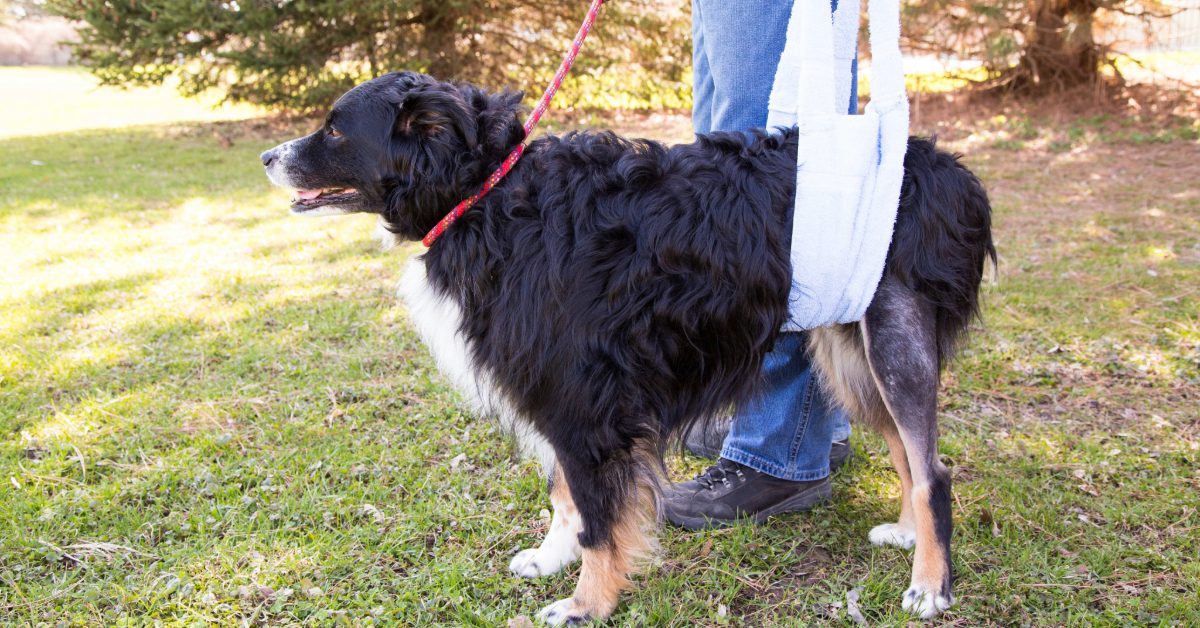
- Using mobility equipment when prescribed
- Following a controlled walking schedule
And there is another challenge pet parents do not always expect: Your dog may become harder to restrict as they start feeling better. Feeling better and being fully recovered are not necessarily the same thing.
Who Can Care for My Dog With a Torn ACL While I Work?
If your dog needs medication, mobility assistance, controlled bathroom breaks or strict activity restriction, leaving them home for a full workday may be difficult.
At the same time, a dog with a CCL injury may not be appropriate for traditional group daycare.
This creates a gap for many pet parents. The dog may be medically stable and not need hospitalization, but still need more structure and support than their normal routine provides.
That is where specialized dog recovery care can be helpful.
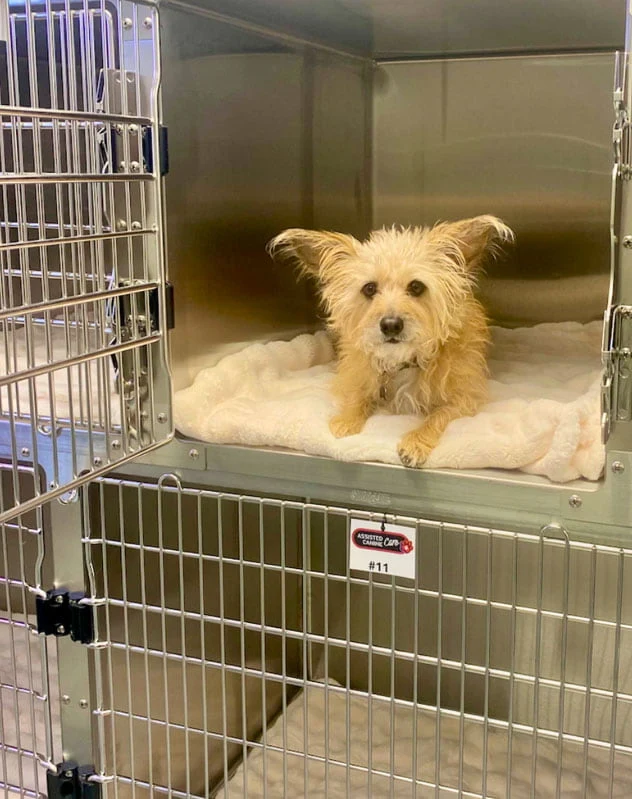
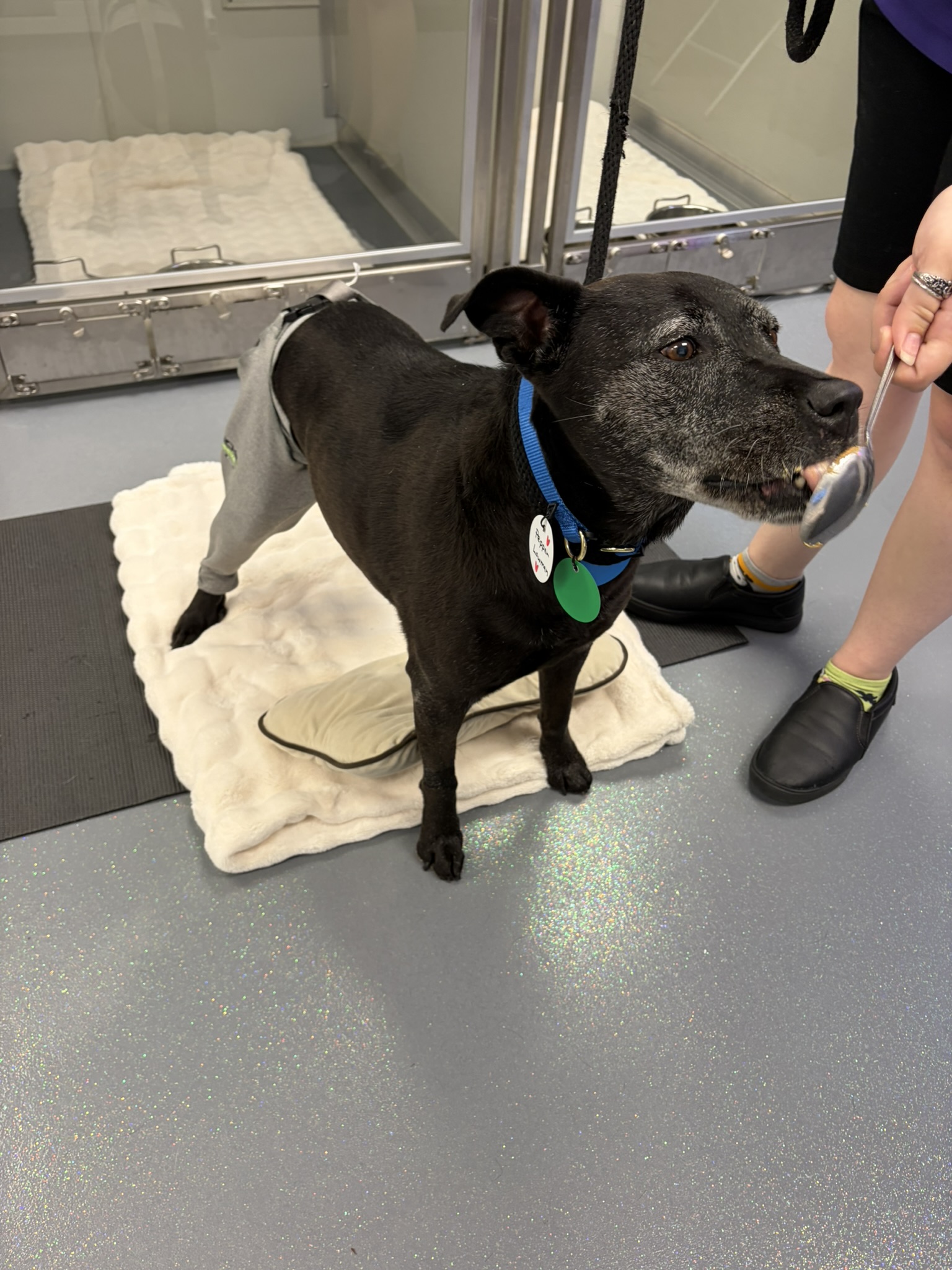
Assisted Canine Care Plus (ACC+) in Cockeysville, Maryland provides structured daytime and overnight recovery care for eligible, medically stable dogs. Care can be built around veterinarian-directed activity restrictions, medication schedules, mobility needs, controlled potty breaks and approved recovery routines.
Learn about: Dog ACL & TPLO Recovery Care at ACC+ →
ACC+ does not replace your veterinarian or determine your dog’s treatment plan. Your veterinary team establishes the medical plan and restrictions. ACC+ helps pet parents carry those instructions through during everyday recovery.
What Is TPLO Surgery for Dogs?
TPLO stands for tibial plateau leveling osteotomy.
It is a surgical procedure commonly used to stabilize the knee of a dog with cranial cruciate ligament disease.
Rather than replacing the damaged CCL, TPLO changes the mechanics of the knee.
During the procedure, a veterinary surgeon makes a curved cut in the upper portion of the tibia, changes the angle of the tibial plateau and stabilizes the bone with a plate and screws.
Because bone has been cut and stabilized, healing takes time.
That becomes important during recovery because a dog may begin walking more comfortably or acting more like themselves before the bone has fully healed.
Are There Other Surgeries for a Dog CCL Tear?
TPLO is not the only surgical procedure used for canine CCL injuries.
Depending on the dog, veterinary surgeons may discuss procedures such as:
- TPLO, or Tibial Plateau Leveling Osteotomy
- TTA, or Tibial Tuberosity Advancement
- Extracapsular or lateral suture stabilization
- Other surgical approaches appropriate for the individual dog
There is not one procedure that pet parents should independently select based on information online.
A veterinarian or veterinary surgeon can explain why a particular procedure is being recommended for your dog.
What Does TPLO Surgery Recovery Look Like?
Recovery after TPLO generally involves a period of restricted activity followed by a gradual return to greater movement according to the veterinary surgeon’s instructions.
A dog’s recovery plan may include:
- Controlled leash bathroom breaks
- Restricted running and jumping
- Stair restrictions
- Medication
- Incision monitoring
- Mobility assistance
- Controlled walks
- Prescribed rehabilitation exercises
- Veterinary rechecks
- Follow-up imaging
- Gradual increases in activity
The exact timeline varies.
Your veterinary surgeon should determine when your dog is ready for each increase in activity.
Why Can TPLO Recovery Get Harder When My Dog Starts Feeling Better?
One of the trickiest stages of TPLO recovery can happen when the dog starts acting normal again.
They may have more energy. They may want longer walks. They may try to jump onto furniture.
They may want to play with another dog. From the pet parent’s perspective, the dog can look recovered.
But improved comfort and energy do not automatically mean the knee or bone has completed the healing process.
Continue following your veterinary surgeon’s restrictions until your dog has been cleared for additional activity.
How Do I Keep My Dog Calm After TPLO Surgery?
Keeping a dog calm after TPLO surgery often requires managing both their environment and their need for appropriate mental engagement.
Your veterinarian may recommend restricting physical activity while still allowing certain calm activities.
Depending on what has been approved for your dog, that might include quiet interaction, food-based enrichment, sniffing activities or other low-movement enrichment.
The important word is approved.
An activity that is appropriate for one recovering dog may not be appropriate for another.
Can I Leave My Dog Alone After TPLO Surgery?
Whether a dog can safely be left alone after TPLO surgery depends on the dog, their stage of recovery and their veterinary instructions.
Considerations may include:
- How well the dog tolerates confinement
- Mobility
- Bathroom needs
- Medication schedules
- Activity restrictions
- Whether the dog tries to jump or escape
- Whether other pets are in the home
- Whether the dog needs assistance standing or walking
Some dogs may be able to spend periods safely resting at home. Others may need more frequent supervision or hands-on assistance.
Your veterinary team can help you understand what level of supervision is appropriate.
What If I Have to Work During My Dog’s TPLO Recovery?
Returning to work while a dog is still under activity restrictions can be stressful.
Pet parents may need a plan for medication, bathroom breaks, controlled movement, mobility assistance and preventing the dog from doing too much while no one is home.
Depending on the dog, options may include help from family, an appropriate in-home caregiver or a specialized recovery-care program.
For medically stable dogs who need structured daytime support, ACC+ provides another option.
Dogs do not participate in traditional group daycare while they are under recovery restrictions. Instead, eligible dogs can have their routine built around the instructions provided for their care.
Explore ACL & TPLO Recovery Care at ACC+ →
When Can My Dog Return to Normal Activity After an ACL Tear or TPLO Surgery?
There is no single date when every dog can return to unrestricted activity after a CCL injury or TPLO surgery.
The timeline depends on factors including the treatment used, healing progress, veterinary examination findings and the individual dog.
Your veterinarian or veterinary surgeon may gradually increase allowed activity as recovery progresses.
Do not use your dog’s energy level alone to determine when restrictions should end.
A dog who desperately wants to run is not necessarily a dog who has been medically cleared to run.
When Can My Dog Return to Daycare After TPLO Surgery?
A dog should not return to unrestricted group daycare simply because they appear to be walking normally again.
Traditional daycare can involve running, wrestling, jumping, rapid turns and excitement around other dogs.
Your veterinary team should determine when those activities are appropriate again.
For dogs who still have restrictions but whose veterinary team has cleared them for non-hospital care, specialized recovery care may provide an option before they are ready to return to their normal daycare routine.
[Suggested internal link: “When Can My Dog Return to Daycare After TPLO Surgery?” → supporting article]
What Should I Ask My Veterinarian About My Dog’s ACL or CCL Recovery?
Every dog’s recovery plan is different, so it can help to leave your veterinary appointment with clear instructions.
Questions you may want to ask include:
- What activities should my dog avoid?
- How much walking is currently allowed?
- Can my dog use stairs?
- Can my dog get on furniture?
- How should bathroom breaks be handled?
- Does my dog need help getting into a vehicle?
- How long can my dog safely be left alone?
- What medications need to be given and when?
- Are there rehabilitation exercises we should be doing?
- When is the next recheck?
- What changes should prompt me to contact you?
- When can activity begin increasing?
- What needs to happen before my dog can return to normal daycare, boarding or play?
Written instructions can also be helpful if someone else will be assisting with your dog’s care.
Dog ACL and CCL FAQs
Is a dog ACL the same thing as a CCL?
The ligament is called the cranial cruciate ligament, or CCL, in dogs. Because it has a similar role to the ACL in a human knee, many pet parents and online searches use the phrase “dog ACL.”
Can a dog walk with a torn ACL or CCL?
Some dogs with CCL injuries continue to use the affected leg, while others may have significant lameness. The ability to walk does not determine the severity of the injury or what treatment is needed. A veterinarian should evaluate the dog and provide activity instructions.
Can a dog ACL tear get worse?
CCL disease can involve partial or complete tearing and changes within the knee. If a CCL injury is suspected, veterinary evaluation is important so an appropriate treatment and activity plan can be established.
Can a dog recover from a CCL injury without TPLO?
TPLO is one treatment option. Depending on the dog, other surgical procedures or nonsurgical management may be considered. Your veterinarian or veterinary surgeon should recommend the appropriate treatment.
How much should my dog walk with a torn ACL?
There is no universal walking amount for a dog with a CCL injury. The appropriate amount of movement depends on the injury, treatment plan and stage of recovery. Follow the instructions provided by your veterinary team.
How long does TPLO recovery take?
TPLO recovery occurs over a period of weeks to months, but the exact timeline varies by dog and veterinary protocol. Your veterinary surgeon should determine when activity can safely increase and when your dog can return to normal activities.
Is crate rest always required after TPLO surgery?
Recovery instructions vary. Some dogs may have prescribed confinement or crate-rest routines, while others may use another controlled recovery space. Follow the specific instructions provided by your veterinary surgeon.
Can ACC+ care for dogs that are not having ACL surgery?
Yes. ACC+ may support eligible, medically stable dogs following veterinarian-directed medical or conservative management as well as dogs recovering after surgery.
Is ACC+ a veterinary hospital?
No. ACC+ is not a veterinary hospital and does not diagnose CCL injuries, determine whether surgery is necessary or create treatment plans. ACC+ provides structured recovery support for eligible, medically stable dogs following veterinary-directed care plans.
Understanding the Injury Is Only Part of the ACL Recovery Journey
A dog ACL or CCL injury can affect much more than the knee.
It can change your dog’s walks, bathroom routine, sleeping arrangements, medication schedule, play, stairs and the way your family manages an ordinary workday.
Your veterinarian or veterinary surgeon determines how the injury should be treated.
Then comes the part that happens between veterinary appointments: following that plan consistently.
If your dog is medically stable but needs more support than being home alone or attending traditional daycare can provide, Assisted Canine Care Plus in Cockeysville, Maryland offers structured daytime and overnight recovery care.
ACC+ can support eligible dogs during veterinarian-directed medical management, while waiting for surgery, after TPLO or another orthopedic procedure, and during the gradual return to activity.
Your veterinarian sets the boundaries. We build your dog’s day inside them.
Learn About Dog ACL & TPLO Recovery Care at ACC+