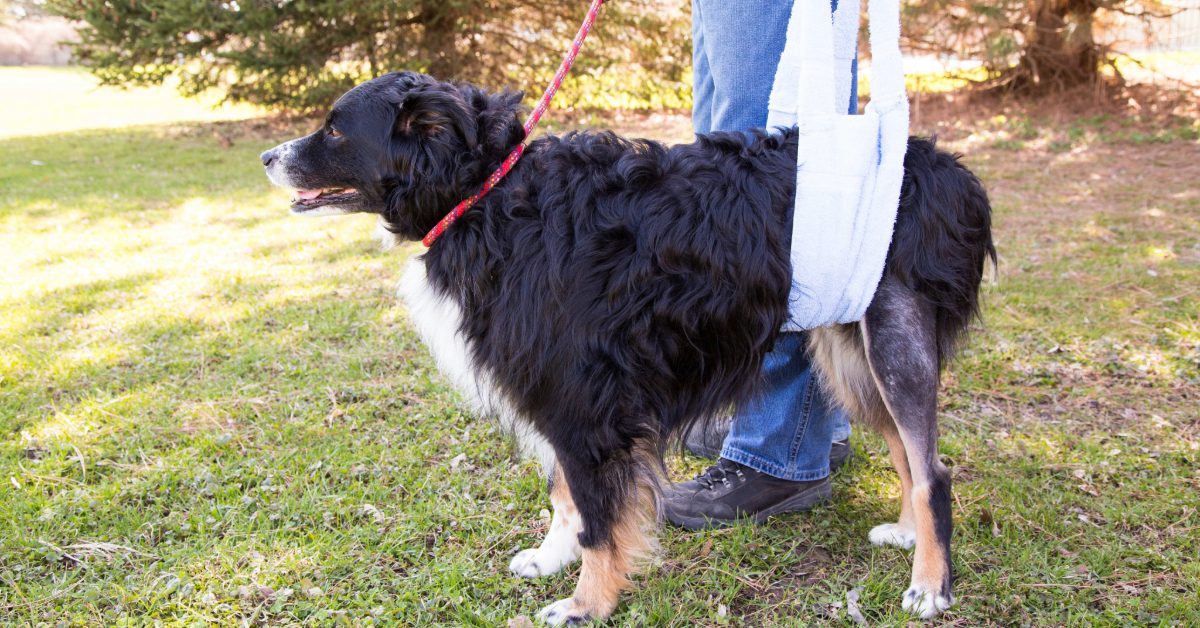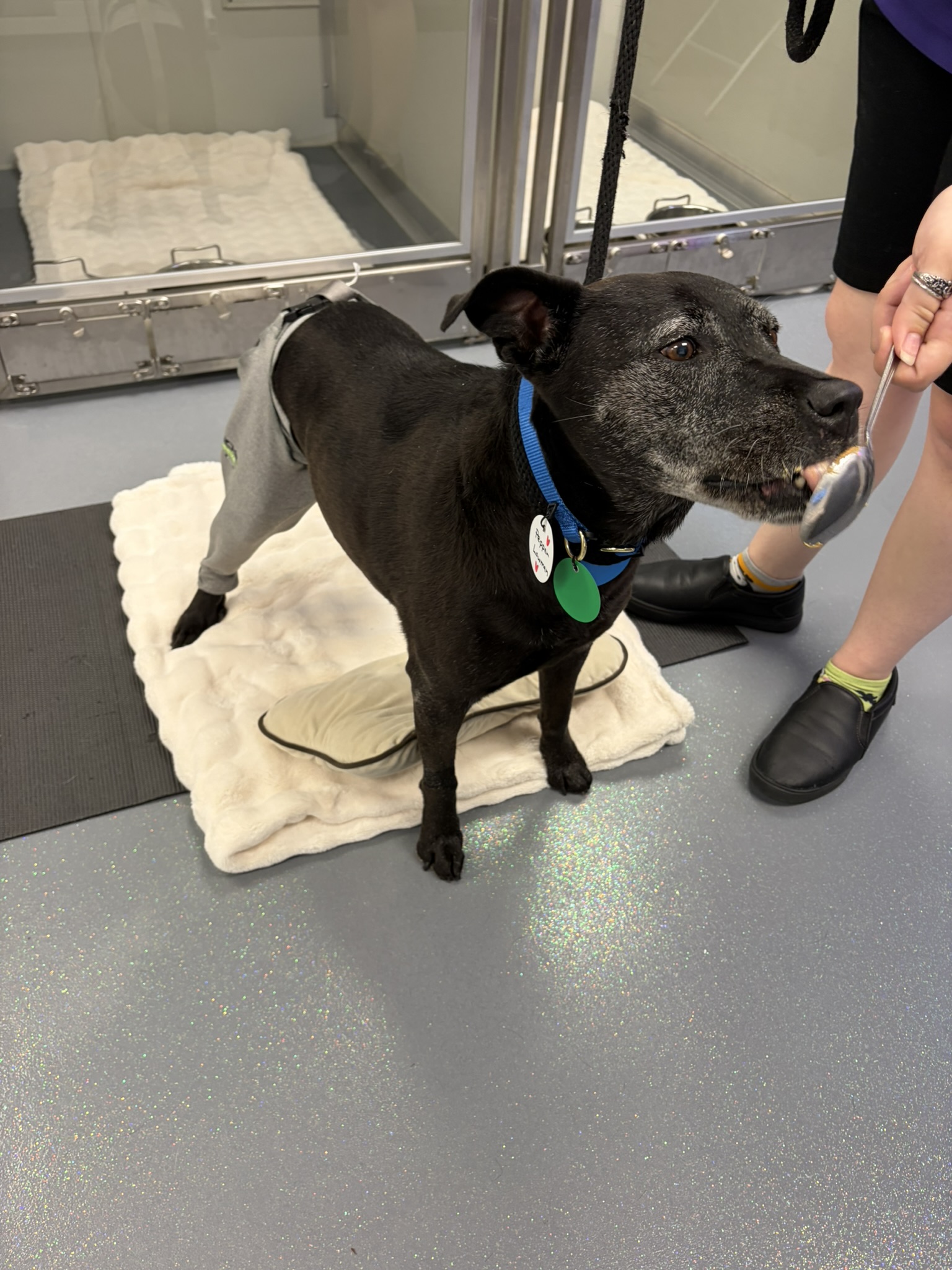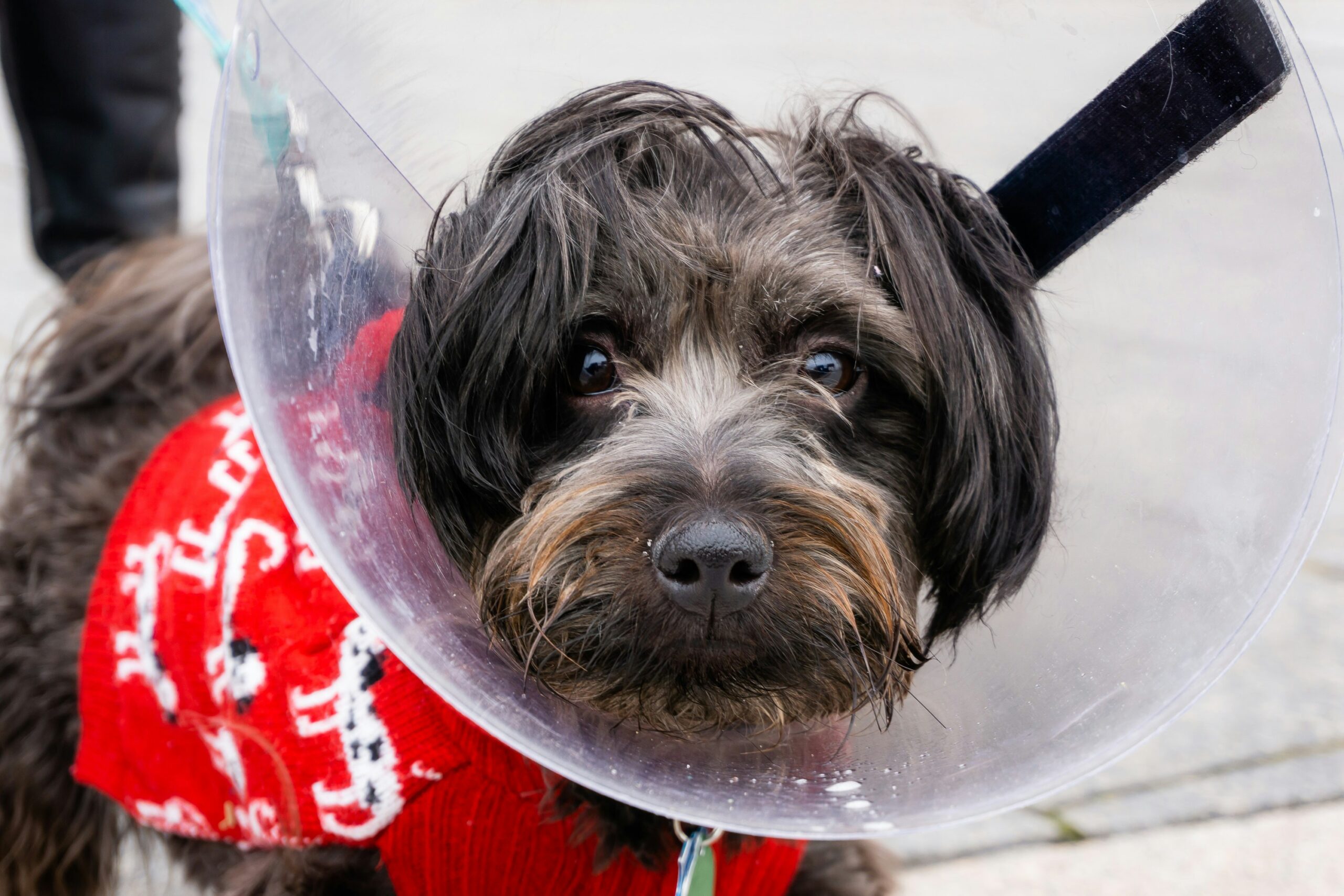

Keeping your dog mentally stimulated during surgery recovery is about finding calm, low-impact activities that engage their brain without interfering with the physical restrictions prescribed by their veterinarian. Depending on your dog’s procedure and recovery plan, appropriate enrichment may include licking activities, food puzzles, scent games, gentle training, quiet one-on-one interaction, and simply giving your dog new things to safely observe and explore.
The tricky part? Your dog’s brain may be ready for adventure long before their body is.
As the days of recovery add up, a dog who normally enjoys walks, daycare, fetch, or playtime may become bored or restless. Mental enrichment can help make those quieter days more enjoyable—but during recovery, the safest enrichment is enrichment that works within your dog’s medical restrictions.
Why Mental Enrichment Matters During Dog Surgery Recovery
Dogs don’t stop needing stimulation simply because they’ve had surgery.
Enrichment gives dogs opportunities to use natural behaviors such as sniffing, licking, chewing, problem-solving, and interacting with their environment. The ASPCA recommends enrichment activities that engage dogs mentally and physically, including food-based activities, scent work, and opportunities to use their natural instincts.
During surgical recovery, however, enrichment needs to look different.
A game that’s perfectly appropriate for a healthy dog could encourage too much movement for a dog recovering from surgery.
Before introducing any new activity, consider:
- Does it require my dog to run or jump?
- Will they need to twist, reach, or move around repeatedly?
- Could they become overly excited?
- Could it interfere with an incision, stitches, bandage, or recovery device?
- Can the activity be done while lying down or remaining relatively still?
- Does it follow the restrictions my veterinarian gave us?
When you’re unsure, ask your veterinarian before introducing the activity.
1. Try Licking Activities
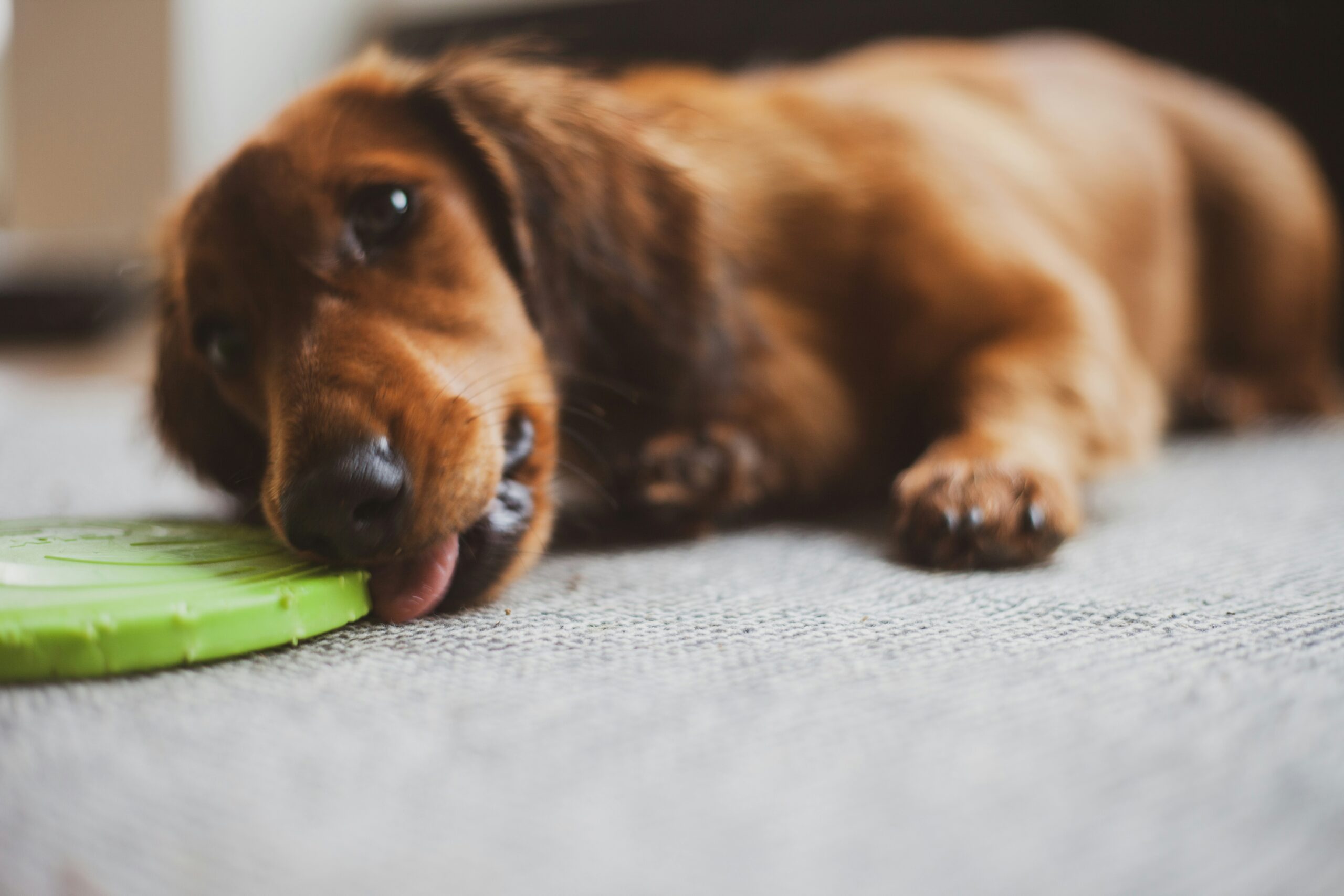
For dogs who can safely have treats or food-based enrichment, licking can be an easy way to provide stimulation without requiring much physical movement.
 Depending on your dog’s dietary restrictions and veterinary instructions, you might try:
- A lick mat with a thin layer of dog-safe food
- A stuffed rubber toy
- A small amount of wet dog food spread onto an appropriate surface
- Part of your dog’s normal meal served as enrichment instead of in a bowl
Freezing a stuffed toy or lick mat can sometimes make the activity last longer.
Keep your dog’s overall calorie intake in mind, particularly when physical activity has temporarily decreased. Using a portion of their regular meal rather than continually adding treats is one easy option.
And if your dog has dietary restrictions, gastrointestinal concerns, or recently underwent a procedure that affects eating, check with your veterinarian before introducing new foods.
2. Turn Mealtime Into a Simple Brain Game
Meals are an easy opportunity for enrichment because you’re using something already built into your dog’s day.
Instead of automatically serving every meal in a bowl, your veterinarian may approve using:
- A stationary puzzle feeder
- A stuffed food toy
- A slow feeder
- A snuffle mat that can be used without walking around
- A simple food-search activity within your dog’s immediate recovery space
The key during recovery is to choose options that don’t send your dog scrambling around the room.
For example, scattering kibble across the entire house might be wonderful enrichment for a healthy dog—but not for a dog under strict activity restrictions.
Bring the enrichment to your dog rather than making your dog travel to find it.
3. Let Them Use Their Nose
Sniffing is a powerful form of mental engagement for dogs, and simple scent activities can often be adapted for restricted movement.
Try placing a few treats underneath lightweight cups or in a folded towel within easy reach. You can also allow your dog to investigate a new dog-safe object or scent while remaining in their designated recovery area.
For dogs permitted to take short leash walks, you might ask your veterinarian whether your dog can spend part of their approved outdoor time simply sniffing rather than trying to cover more distance.
A five-minute outing doesn’t necessarily need to be about how far you walk.
Sometimes the interesting part is everything your dog gets to smell along the way.
4. Practice Calm, Low-Movement Training
Training can exercise your dog’s brain without necessarily exercising their body.
If your veterinarian approves, recovery can be a great time to reinforce behaviors that require very little movement, such as:
- Eye contact
- “Touch” using the nose
- Chin rest
- Responding to their name
- Calm settling
- Identifying or choosing between toys
- Other stationary cues your dog already knows
Keep sessions short and positive. This is not the time to practice spins, repeated sits and downs, jumping tricks, weaving through legs, or anything else that could place unnecessary stress on a healing area.
The goal isn’t to teach the most impressive trick. It’s to give your dog something safe to think about.
5. Give Them Something Appropriate to Chew
For dogs who enjoy chewing, an appropriate chew can provide a quiet activity while they rest.
But choose carefully.
Any chew should be appropriate for your dog’s size, chewing style, diet, dental health, and current medical condition, and dogs should be supervised with chew items.
If your dog has recently had dental or oral surgery, do not introduce chews unless your veterinarian specifically says they’re appropriate.
6. Give Your Dog a Change of Scenery Without the Exercise
Enrichment doesn’t always require a toy. Sometimes a different view is enough.
If your dog’s restrictions allow it, create a comfortable resting area where they can safely watch household activity or look out a window without needing to move around.
You can also spend quiet time together in different safe areas of the home if moving between them doesn’t violate your dog’s restrictions.
Even sitting beside your dog while you work, read, or watch TV provides social interaction and a change from spending the entire recovery period alone.
Your attention can be enrichment, too.
7. Rotate Toys Instead of Offering Everything at Once
If your dog has several safe, veterinarian-appropriate toys, don’t necessarily leave all of them out all day.
Try rotating them.
A toy that disappears for a day or two can suddenly become interesting again when it returns.
This is an easy way to introduce novelty without requiring additional physical activity.
Just avoid toys that trigger your dog’s “GO!” button. If seeing a favorite ball immediately makes your dog want to sprint across the room, save that one for after they’re cleared for normal activity.
Watch Your Dog’s Excitement Level
Here’s an important part of recovery enrichment that can easily be overlooked:
Mental stimulation shouldn’t create physical chaos.
An activity may technically involve very little movement but still get your dog extremely excited.
If a puzzle causes your dog to paw aggressively, throw it around, bounce up and down, or race after rolling pieces, it probably isn’t the right recovery activity.
The same goes for looking out the window. If your dog calmly watches people walk past, great. If every delivery truck results in launching toward the window, choose a quieter resting spot.
Your individual dog’s response matters.
What If My Dog Is on Strict Activity Restriction?
If your veterinarian has prescribed strict activity restriction, follow those instructions closely.
“Restricted activity” may mean no running, jumping, stairs, roughhousing, long walks, or unrestricted play. Depending on the procedure, your veterinarian may also recommend crate or small-room confinement.
Read our full guide: What Does “Restricted Activity” Mean for a Dog After Surgery?
The more restrictive your dog’s recovery plan, the more important it becomes to choose enrichment that can happen where your dog is already resting.
If you’re unsure whether an activity is safe, show or describe it to your veterinary team before trying it.
What If My Dog Gets Restless When Left Alone?
Boredom can become especially difficult when a recovering dog also needs to spend several hours alone.
Before leaving, make sure your dog’s recovery environment is safe and that any enrichment you’re leaving behind is appropriate for unsupervised use. Some puzzles, chews, toys, or food activities should only be provided while you’re there to supervise.
More importantly, consider the bigger picture.
Does your dog need medication while you’re gone? Bathroom assistance? Mobility support? Incision monitoring? Helpmaintaining their activity restrictions?
If you’re trying to determine whether your dog is ready to spend time alone, read Can I Leave My Dog Alone After Surgery? What Pet Parents Should Consider.
When Recovery Doesn’t Fit Into Your Workday
Sometimes the challenge isn’t coming up with another enrichment activity.
It’s managing an entire recovery plan while you’re away.
Your dog may need quiet rest, controlled movement, medication at specific times, bathroom assistance, monitoring, and appropriate stimulation throughout the day.
And traditional daycare, which is typically centered around activity and socialization, may not be the right environment for a dog with those needs.
That’s where Assisted Canine Care Plus (ACC+) can help.
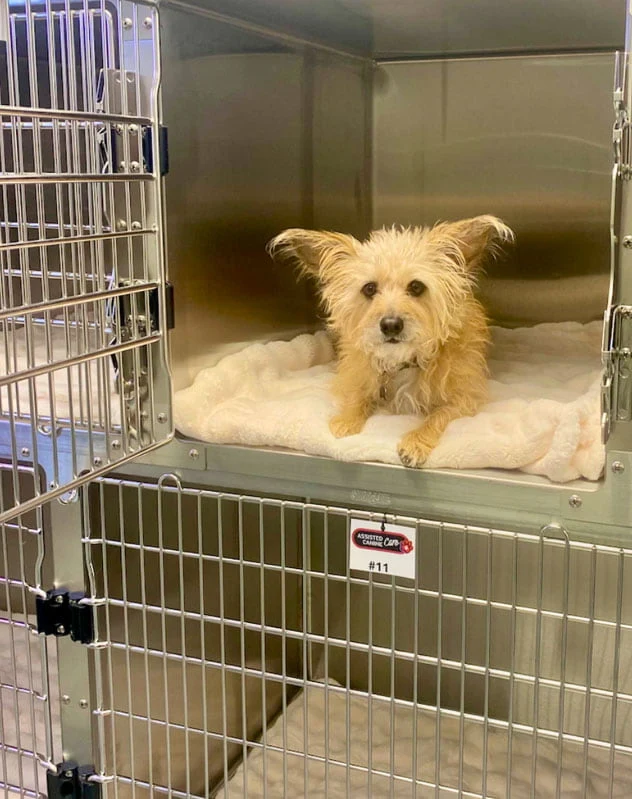
ACC+ in Cockeysville, Maryland provides specialized support for medically stable dogs who need more than traditional daycare or boarding but don’t require hospitalization.
Depending on your dog’s veterinary instructions and individual recovery plan, their time at ACC+ may include:
- Quiet, controlled rest
- Controlled bathroom breaks
- Medication administration
- Meals and hydration
- One-on-one attention
- Appropriate gentle enrichment
- Mobility assistance
- Monitoring and comfort checks
The enrichment we provide isn’t one-size-fits-all.
It should fit the dog in front of us and the recovery plan their veterinarian has established.
You can learn more about how we care for recovering dogs, medication support, eligibility, and what a typical day looks like in our ACC+ Frequently Asked Questions.
A Better Way to Think About Enrichment During Recovery
When your dog is healthy, enrichment might mean:
What can we do today?
During recovery, a better question is:
What can my dog safely experience today?
Maybe that’s working through a food puzzle while lying down.
Maybe it’s five minutes of sniffing during a veterinarian-approved bathroom break.
Maybe it’s practicing eye contact for a few treats.
Or maybe it’s simply lying next to you while watching the world outside.
Recovery enrichment doesn’t have to be elaborate.
It just needs to provide safe opportunities for your dog to think, sniff, lick, chew, interact, and stay connected without compromising their healing.
Supporting Your Dog Through the Entire Recovery
Mental stimulation is only one piece of post-surgery care.
Pet parents may also need to manage medication schedules, restricted activity, bathroom breaks, incision monitoring, mobility challenges, and supervision—all while trying to maintain their normal routines.
For a complete look at navigating this period, visit our cornerstone guide:
Dog Recovery Care in Maryland: What Happens After the Vet Visit?
And explore the rest of our growing dog recovery resource library: